A sudden storm rolls through overnight. By morning, you’re staring at a water stain spreading across your ceiling, a pile of shingles in your yard, or — worst case — a visible gap where your roof used to be solid. If you’re a Florida homeowner, this scenario isn’t just possible. It’s practically a rite of passage.
Florida’s climate is uniquely brutal on roofs. Between hurricane season, near-daily summer thunderstorms, intense UV exposure, and high humidity, your roof faces more punishment than virtually anywhere else in the country. When damage strikes, knowing what to expect from the emergency roof repair process — including realistic costs, realistic timelines, and how to avoid being taken advantage of — can save you thousands of dollars and a great deal of stress.
This guide walks you through everything you need to know.
What Qualifies as a Roof Emergency?
Not every roofing problem requires an emergency call. But some situations demand immediate action to prevent escalating damage. Call for emergency roof repair in Florida when you notice:
- Active water intrusion — water dripping or flowing into your living space
- Visible structural damage — collapsed decking, sagging areas, or missing sections of roof
- Large areas of missing shingles — especially following a storm
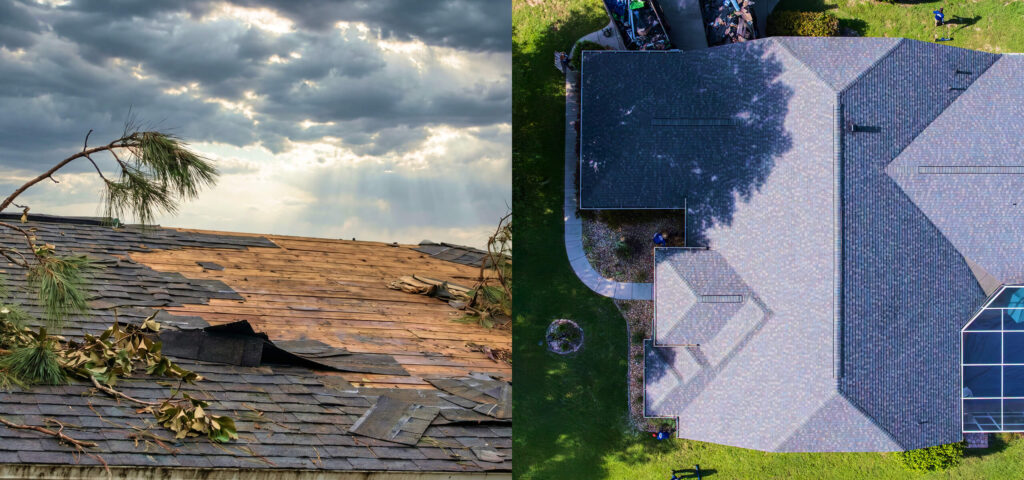
- Fallen trees or debris — any impact that may have compromised the roof deck
- Exposed underlayment or decking — your roof’s last line of defense is now vulnerable
- Damage near HVAC units, skylights, or chimneys — these penetrations are fast pathways for water
When in doubt, treat it as an emergency. In Florida’s climate, a small leak left unaddressed for even 24-48 hours can lead to mold growth, damaged insulation, ruined drywall, and compromised structural framing.
Emergency Roof Repair Cost in Florida: What You’ll Actually Pay
Roof repair cost in Florida varies widely based on the severity of damage, your roof type, and how quickly you need service. Here’s a realistic breakdown:
Typical Cost Ranges
| Type of Repair | Estimated Cost Range |
| Emergency tarping (temporary protection) | $300 – $1,200 |
| Minor shingle repair (few shingles) | $250 – $600 |
| Moderate shingle damage (1-2 squares) | $600 – $1,800 |
| Roof deck repair (partial) | $800 – $2,500 |
| Flashing repair (chimney, skylights) | $400 – $1,500 |
| Significant storm damage (full section) | $2,000 – $8,000+ |
Note: These ranges reflect typical Florida market pricing and will vary by county, material costs, and contractor.
Factors That Drive Emergency Roof Repair Costs in Florida
1. Roof material. Asphalt shingle repairs are generally the most affordable. Tile roofs (very common in Florida) cost more to repair due to the cost of matching tile and the skill required. Metal roofs fall in the middle.
2. Time of service. Emergency after-hours calls, weekend repairs, or same-day service during peak storm season carry a premium — often 20-50% above standard rates.
3. Extent of secondary damage. If water has reached the decking, insulation, or interior framing, the repair scope and cost expands significantly.
4. Your location in Florida. Labor costs in South Florida tend to run higher than in Central or North Florida. Coastal areas may have stricter permitting requirements as well.
5. Permit requirements. Florida has some of the most stringent building codes in the nation. Depending on the scope of repairs, a permit may be required. Reputable contractors factor this in.
Will Insurance Cover Emergency Roof Repairs?
In many cases, yes — if the damage is sudden and caused by a covered peril such as a named storm, high winds, hail, or a falling tree. Steps to take for a smoother claim:
- Document everything immediately — photos and video of all damage before repairs begin
- Call your insurance company first — get a claim number before authorizing permanent repairs
- Get emergency tarping done quickly — most policies require you to mitigate further damage
- Keep all receipts and invoices — you’ll need these for reimbursement
- Work with a contractor experienced in insurance claims — the supplement process is complex
Emergency Roof Repair Timeline: What to Expect Step by Step
Within the First Few Hours: Temporary Protection
The first priority isn’t a permanent fix — it’s stopping the bleeding. A qualified emergency roofing crew will arrive and deploy temporary measures including:
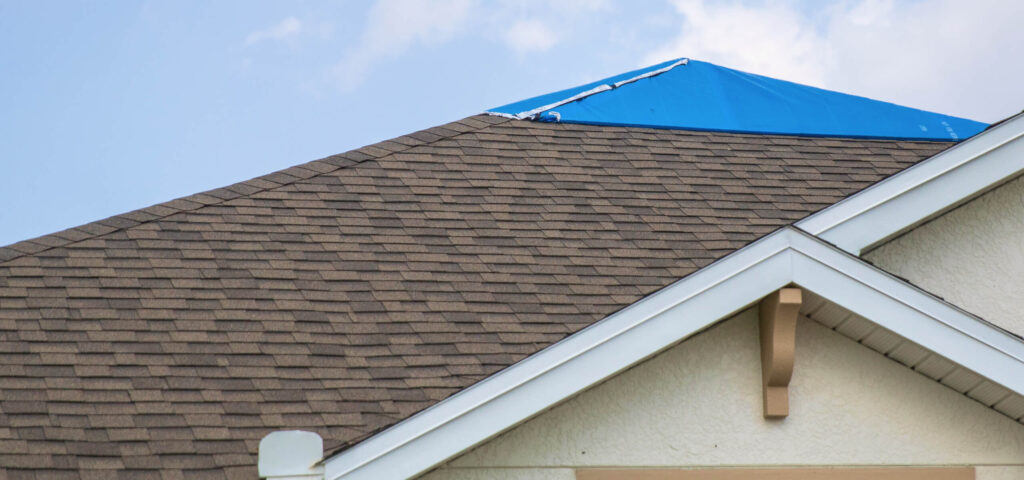
- Emergency tarping — heavy-duty polyethylene tarps secured to protect the vulnerable area
- Temporary sealant or flashing around localized damage points
- Interior damage assessment to identify how far water has already traveled
This phase can often be completed the same day you call, even after hours.
Days 1-3: Damage Assessment and Documentation
Once the immediate emergency is stabilized, a thorough inspection is conducted. A reputable contractor will:
- Inspect the full roof surface, not just the obvious damage
- Check the decking for soft spots, delamination, or rot
- Examine interior attic space for moisture infiltration
- Document all findings with photos for your records and your insurance adjuster
- Provide a written estimate detailing materials, labor, and scope
Days 3-14: Permanent Repairs (Standard Timeline)
Once materials are sourced, permits obtained, and insurance authorization received, permanent repairs are completed. Factors that can extend this timeline:
- Post-storm demand surges — lead times can stretch from days to weeks after major storms
- Material availability — certain tile profiles or specialty products may need to be ordered
- Permitting delays — in some Florida counties, permit approval adds several business days
- Scope expansion — if inspection reveals more damage than initially visible
What to Expect on Repair Day
- Crew arrives in the morning, typically 7-8 a.m.
- Landscaping and exterior areas protected with tarps to catch debris
- Damaged materials removed and decking inspected
- Necessary decking repair completed before new materials go on
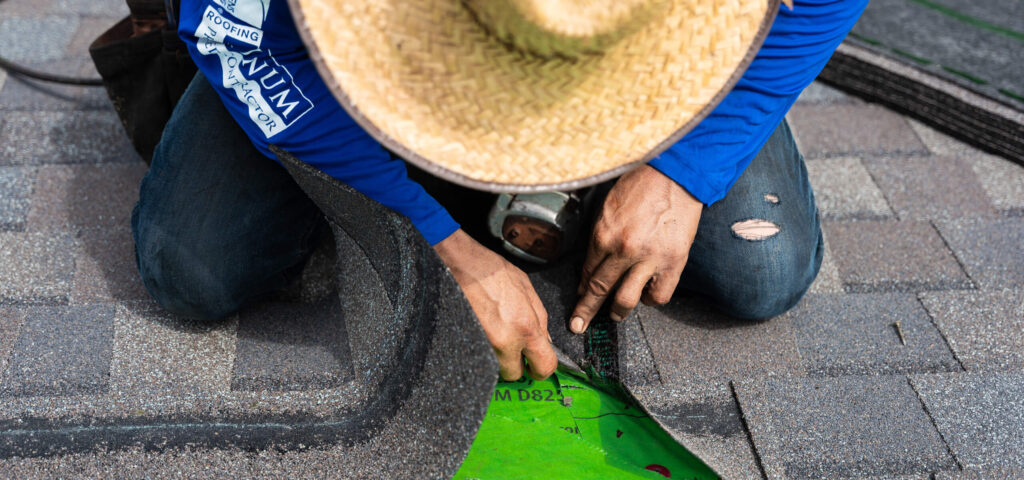
- New roofing materials installed and sealed
- Thorough cleanup performed, including magnet sweep for nails
- Final walkthrough with you before the crew leaves
How to Choose an Emergency Roofing Contractor in Florida
After a major storm, contractor fraud spikes dramatically in Florida. Unlicensed operators — sometimes called “storm chasers” — move through hard-hit communities offering quick, cheap repairs that fail within months.
Non-Negotiable Qualifications
Florida State Contractor License. All roofing contractors in Florida must hold a valid license from the DBPR. Verify at myfloridalicense.com. Require the license number before signing anything.
Proof of insurance. Ask for a certificate showing both general liability coverage and workers’ compensation.
Local presence. A contractor with a physical address and local reviews is far less likely to disappear after taking your deposit.
Red Flags to Watch For
- Demanding full payment upfront
- Offering to waive your insurance deductible (insurance fraud in Florida)
- Refusing to provide a written, itemized estimate
- No permit pulled for work that clearly requires one
- Unusually low bids that seem too good to be true — they are
Questions to Ask Before Signing
- Are you licensed and insured in Florida? (Ask to see documentation)
- Do you pull permits when required?
- What warranty do you offer on materials and labor?
- Will you coordinate directly with my insurance adjuster?
- Who specifically will be performing the work — your own crew or subcontractors?
Florida-Specific Considerations
Hurricane Season Preparation
Florida’s hurricane season runs June 1 through November 30. The best time to address any roofing vulnerability is before a storm — not after. An annual roof inspection each spring can identify issues while you still have time to act at non-emergency prices.
Florida Building Code Requirements
Florida adopted some of the strongest residential building codes in the nation following Hurricane Andrew in 1992. For roofing, this includes specific requirements around:
- Wind mitigation features — how the roof deck is attached, how shingles are fastened, and how the roof connects to the wall structure
- Miami-Dade and Broward County product approvals — required for materials used in High-Velocity Hurricane Zones
- Secondary water barrier requirements — peel-and-stick underlayment required in many parts of Florida
Mold: Florida’s Hidden Threat
Florida’s heat and humidity mean that water intrusion + time = mold, almost without exception. If water has been present in your home for more than 24-48 hours, have a mold assessment done. A reputable contractor will be upfront about the risk and refer you to a qualified remediation professional.
| Emergency Roof Damage? Don’t Wait.Water intrusion, mold, and structural damage happen fast in Florida’s climate. Quality First Roofing provides rapid emergency response across The Villages, Ocala, Citrus County, Hernando County, and all of Central Florida. Call us: 352.220.7367 Website: qualityfirstroofingllc.com License #CCC1331249 | Owens Corning Preferred Contractor |
Serving Florida homeowners with trusted, high-quality roofing solutions backed by experience, care, and commitment to our community